
Search
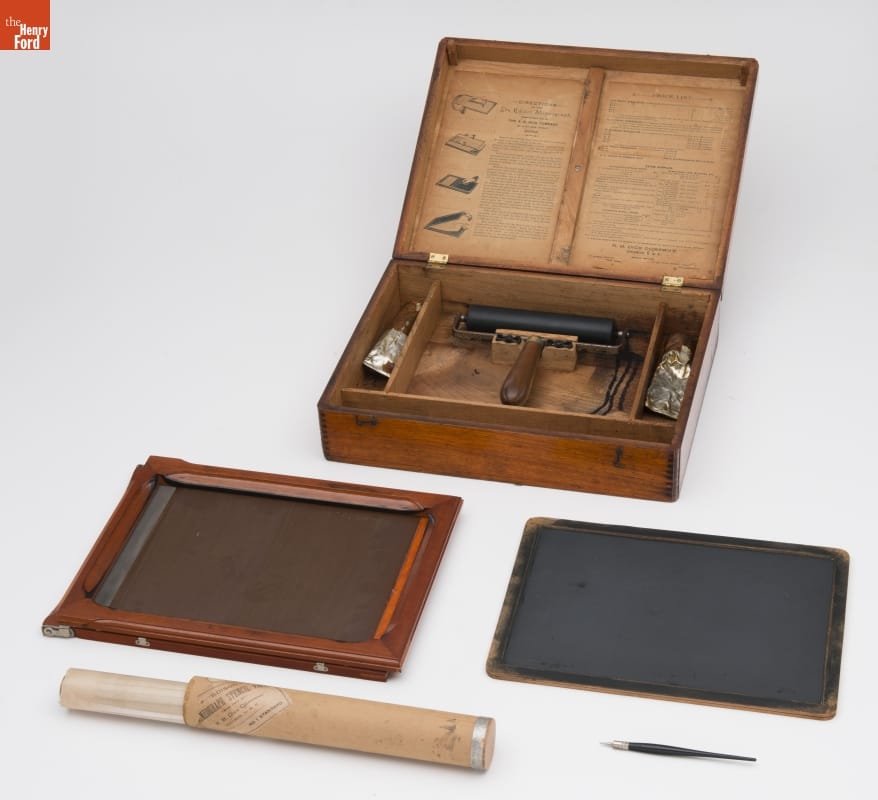
- Edison No. 1 Mimeograph, 1887 - Thomas Edison received a patent in 1876 for "Autographic Printing," covering the electric pen and flatbed press; a patent for "Autographic Stencils" followed in 1880. The mimeograph was invented by Albert Blake Dick in 1887, who licensed and refined Edison's patents. This low-cost, stencil-based printing technology was popular until displaced by photocopying machines and offset printing in the 1960s.
- 1887
- Collections - Artifact
Edison No. 1 Mimeograph, 1887
Thomas Edison received a patent in 1876 for "Autographic Printing," covering the electric pen and flatbed press; a patent for "Autographic Stencils" followed in 1880. The mimeograph was invented by Albert Blake Dick in 1887, who licensed and refined Edison's patents. This low-cost, stencil-based printing technology was popular until displaced by photocopying machines and offset printing in the 1960s.
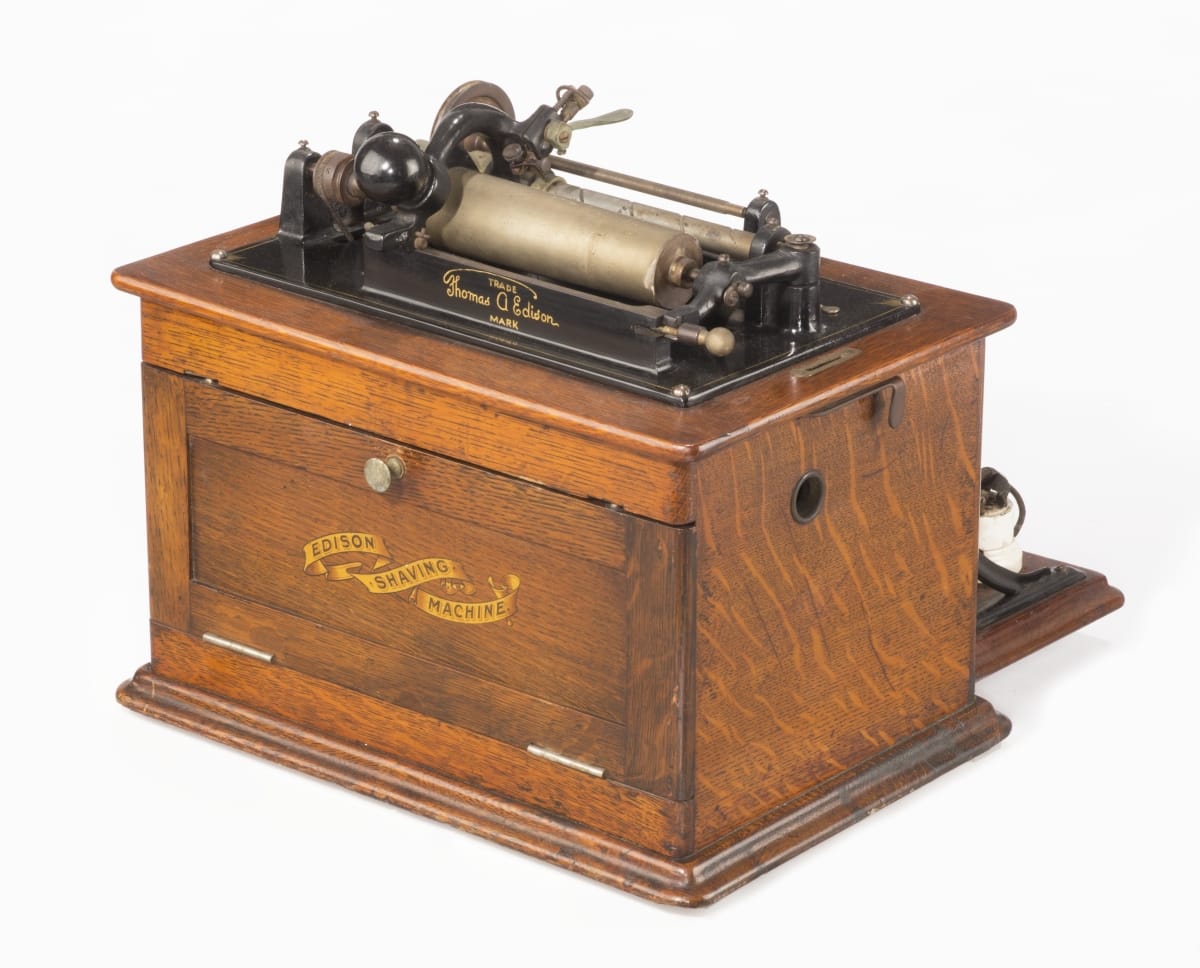
- Cylinder Shaving Machine, circa 1907 - Dictaphones and Ediphones were sound recording devices largely used for oral dictation in business settings. In this scenario, wax cylinder recordings were passed to a secretary, who listened to the recording with a playback-only transcriber and then typed up notes. A shaving machine, such as this one, scraped the previously inscribed layer away allowing a wax cylinder to be reused over 100 times.
- circa 1907
- Collections - Artifact
Cylinder Shaving Machine, circa 1907
Dictaphones and Ediphones were sound recording devices largely used for oral dictation in business settings. In this scenario, wax cylinder recordings were passed to a secretary, who listened to the recording with a playback-only transcriber and then typed up notes. A shaving machine, such as this one, scraped the previously inscribed layer away allowing a wax cylinder to be reused over 100 times.
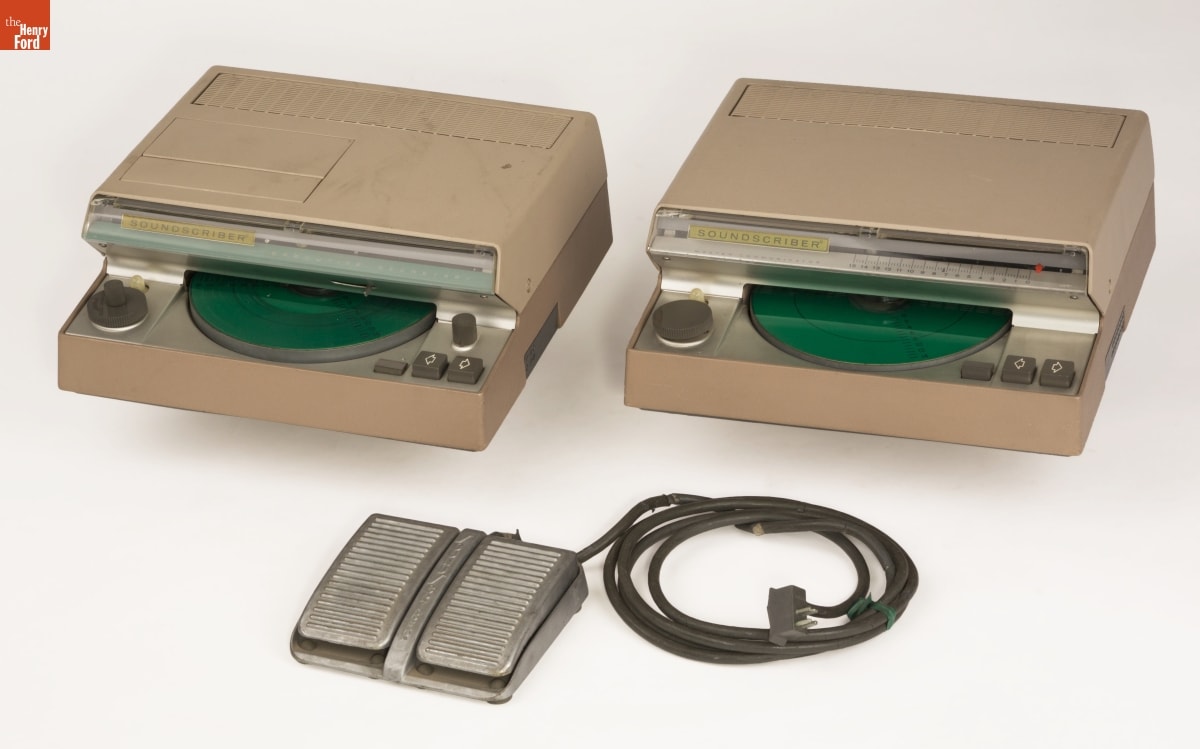
- Soundscriber Dictation System, 1960-1965 -
- 1960-1965
- Collections - Artifact
Soundscriber Dictation System, 1960-1965
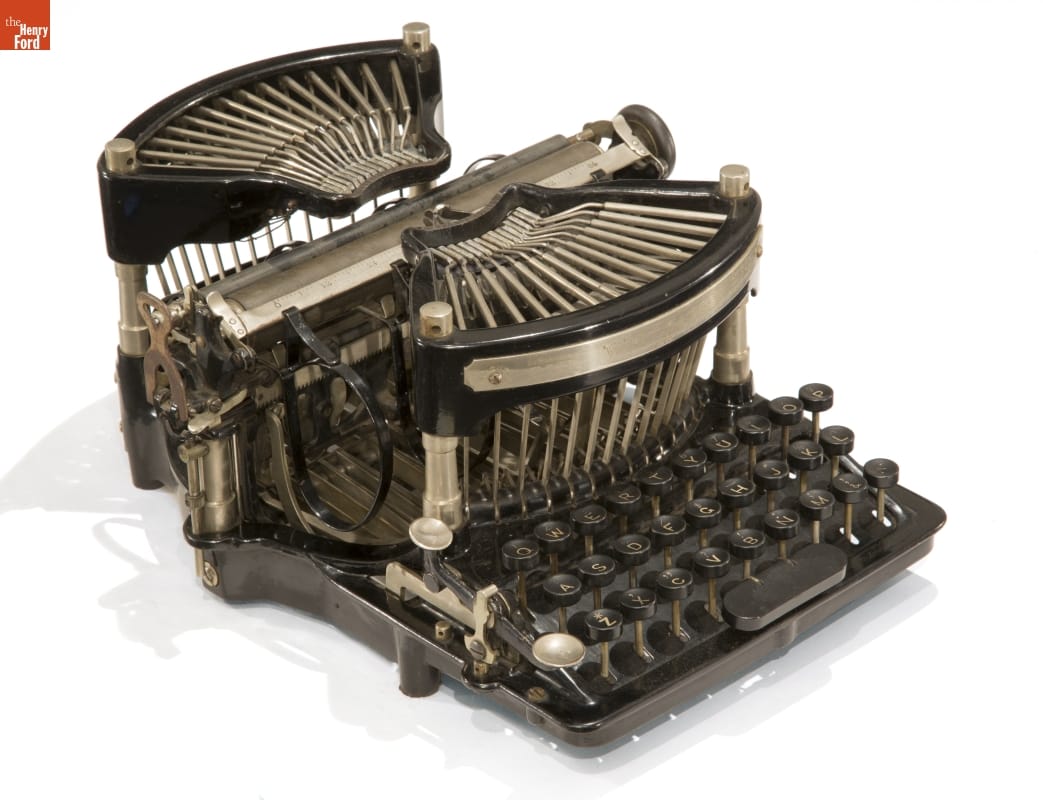
- Williams Desk Typewriter, 1895 - The Williams was part of the incredible flowering of diverse writing machines around the turn of the twentieth century. John Newton Williams' typewriter design featured a central platen with type bars arranged around it front and rear which struck the paper with a unique hopping "grasshopper" movement.
- 1895
- Collections - Artifact
Williams Desk Typewriter, 1895
The Williams was part of the incredible flowering of diverse writing machines around the turn of the twentieth century. John Newton Williams' typewriter design featured a central platen with type bars arranged around it front and rear which struck the paper with a unique hopping "grasshopper" movement.
- Smith Premier Typewriter, Model No. 1, 1890-1896 -
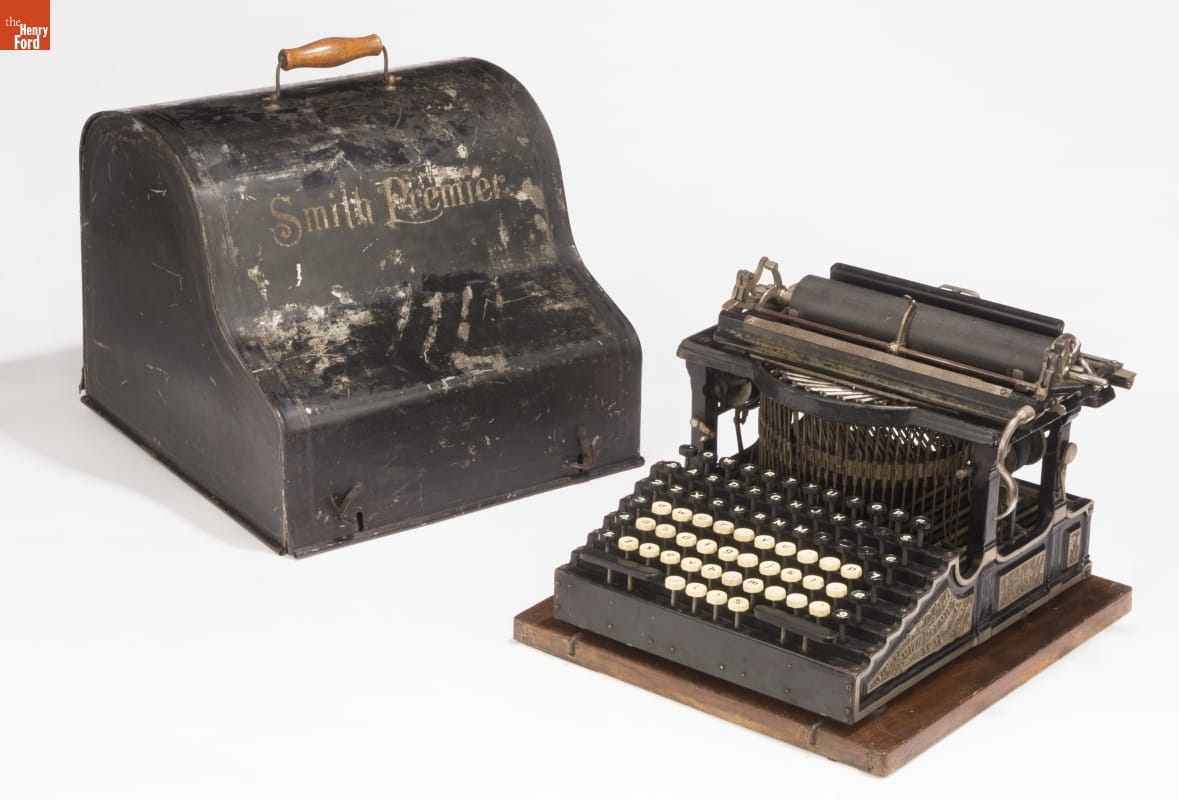
- 1890-1896
- Collections - Artifact
Smith Premier Typewriter, Model No. 1, 1890-1896
- Hammond Typewriter, Model No. 12, 1905-1915 - In the 1880s and 1890s, the demand for office machines led to an incredible flowering of typewriter technologies. Inventor James Bartlett Hammond of New York developed an innovative "type shuttle" for his typewriters which moved type cleanly and efficiently with few moving parts. The Hammond's unusual design was successful, and these portable, elegant typewriters were manufactured for half a century.
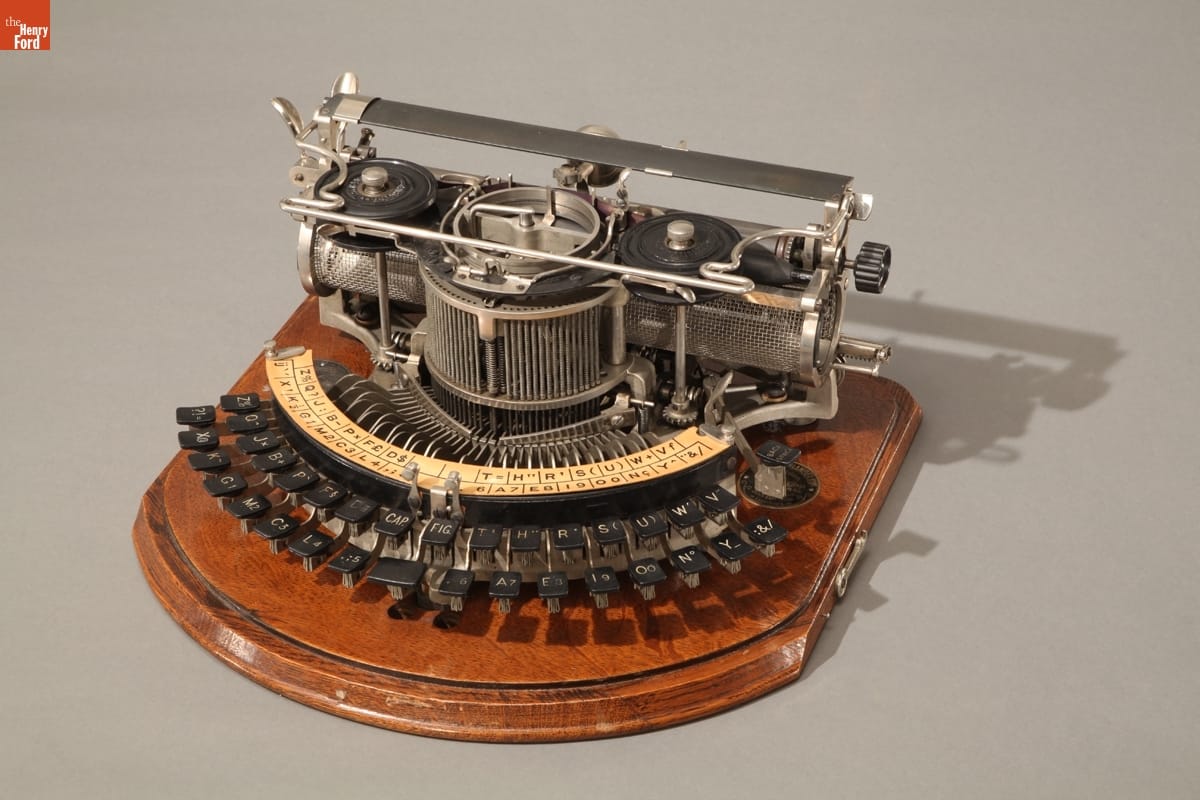
- 1909-1915
- Collections - Artifact
Hammond Typewriter, Model No. 12, 1905-1915
In the 1880s and 1890s, the demand for office machines led to an incredible flowering of typewriter technologies. Inventor James Bartlett Hammond of New York developed an innovative "type shuttle" for his typewriters which moved type cleanly and efficiently with few moving parts. The Hammond's unusual design was successful, and these portable, elegant typewriters were manufactured for half a century.
- Corona Portable Typewriter, 1921 -
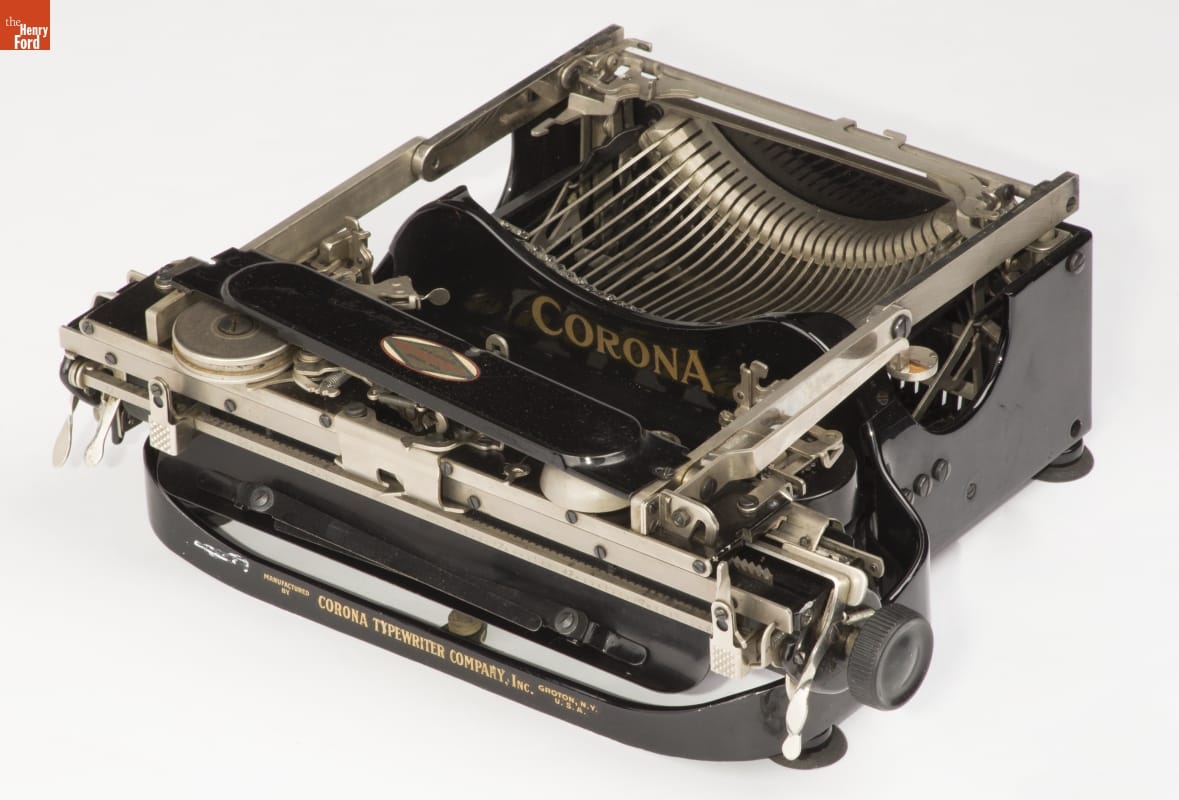
- 1921
- Collections - Artifact
Corona Portable Typewriter, 1921
- Remington Standard Typewriter, Model No. 11, 1916 - Sholes & Glidden introduced the first practical typewriter in 1874. By the 1880s, there were several companies mass producing these machines, including rifle manufacturer Remington & Sons. Typewriters were part of the "information explosion" that included technologies like the phonograph and telephone. They modernized offices by helping workers--increasingly women--reproduce and organize information more neatly and quickly than handwriting.
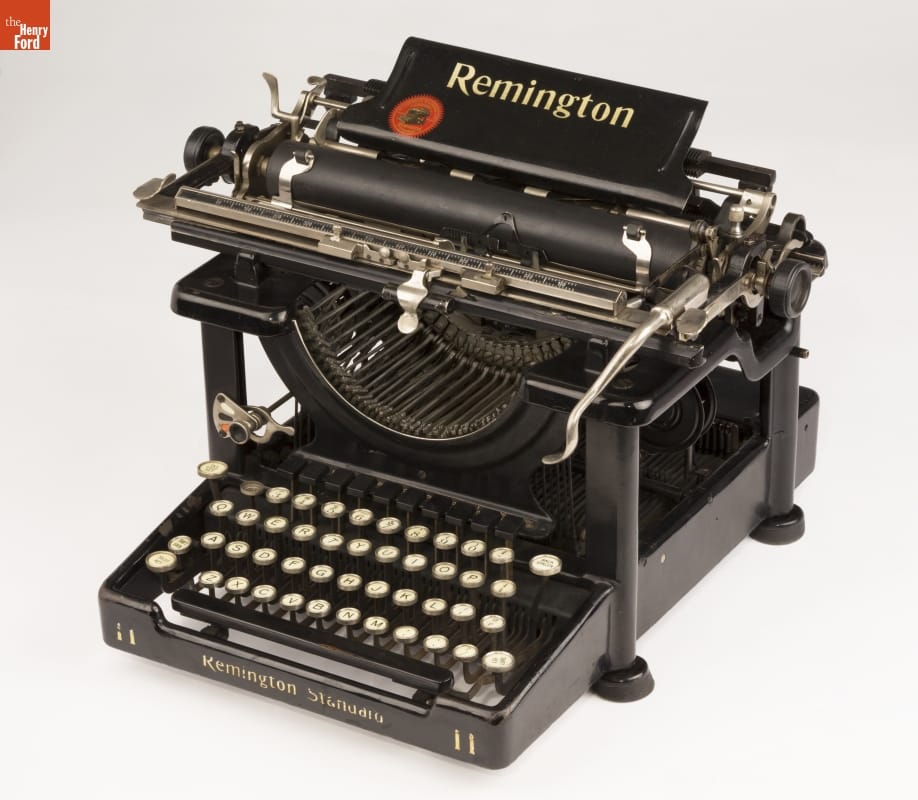
- 1916
- Collections - Artifact
Remington Standard Typewriter, Model No. 11, 1916
Sholes & Glidden introduced the first practical typewriter in 1874. By the 1880s, there were several companies mass producing these machines, including rifle manufacturer Remington & Sons. Typewriters were part of the "information explosion" that included technologies like the phonograph and telephone. They modernized offices by helping workers--increasingly women--reproduce and organize information more neatly and quickly than handwriting.
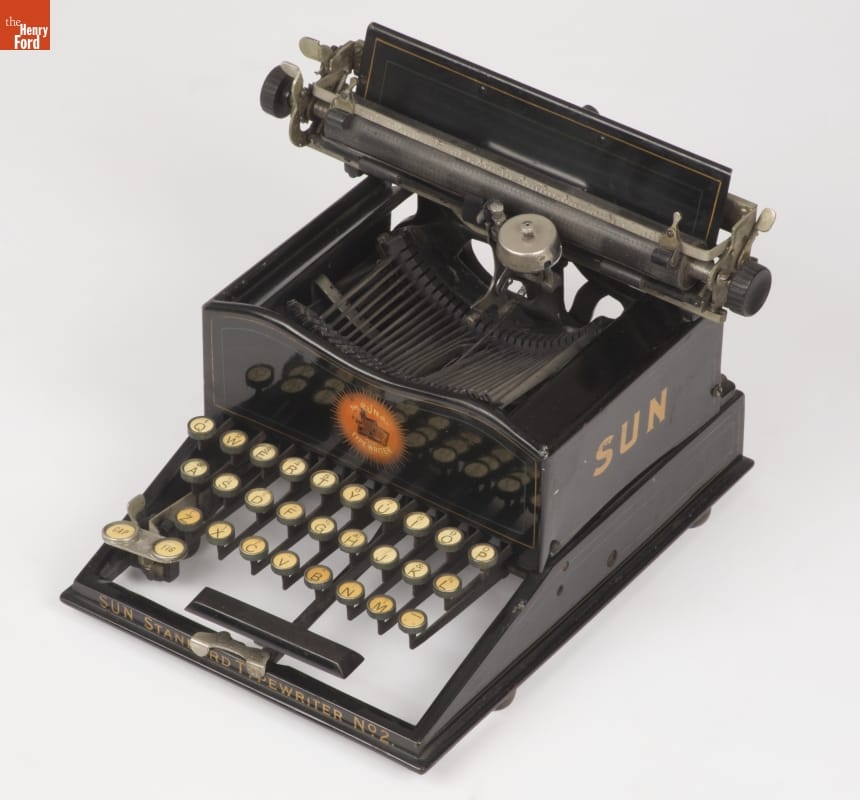
- Sun Standard Typewriter, Model 2, 1901-1907 -
- 1901-1907
- Collections - Artifact
Sun Standard Typewriter, Model 2, 1901-1907
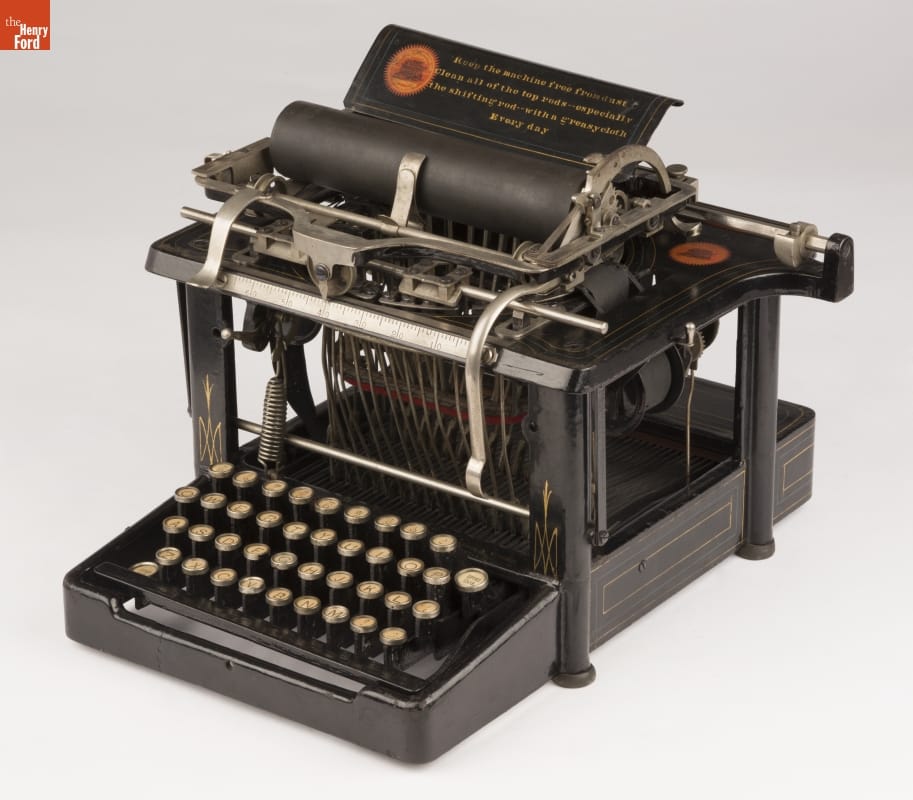
- Remington Desk Typewriter, Model No. 2, 1892 - Sholes & Glidden introduced the first practical typewriter in 1874. By the 1880s, there were several companies mass producing these machines, including rifle manufacturer Remington & Sons. Typewriters were part of the "information explosion" that included technologies like the phonograph and telephone. They modernized offices by helping workers--increasingly women--reproduce and organize information more neatly and quickly than handwriting.
- 1892
- Collections - Artifact
Remington Desk Typewriter, Model No. 2, 1892
Sholes & Glidden introduced the first practical typewriter in 1874. By the 1880s, there were several companies mass producing these machines, including rifle manufacturer Remington & Sons. Typewriters were part of the "information explosion" that included technologies like the phonograph and telephone. They modernized offices by helping workers--increasingly women--reproduce and organize information more neatly and quickly than handwriting.