
Search
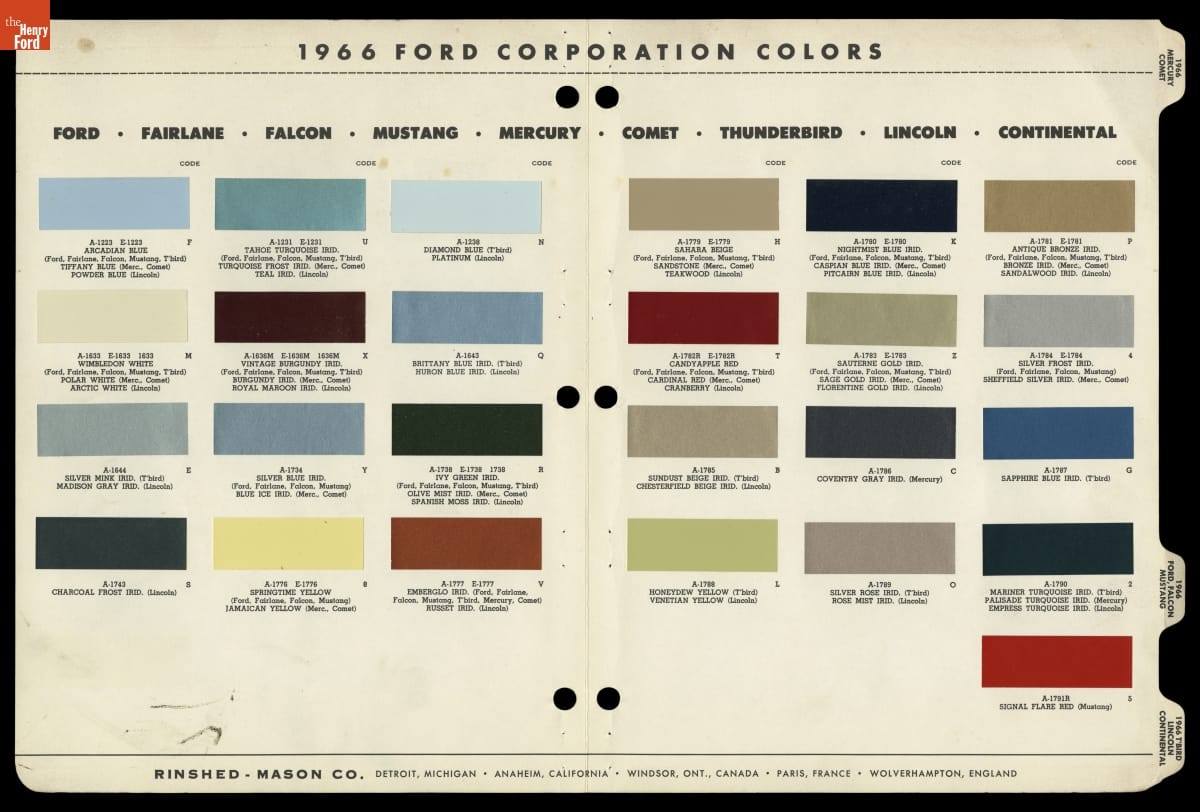
- Paint Color Sample Card for Ford, Lincoln and Mercury Cars, "1966 Ford Corporate Colors" - Fred Rinshed and Herbert Mason formed Rinshed-Mason Company in Detroit, Michigan, in 1919. Mr. Mason previously made hunting decoys, and his decoys had developed a reputation for long-lasting paint finishes. Rinshed-Mason soon became the largest paint supplier to Detroit's booming automotive industry. In 1931, the company introduced the first metallic finish for automobiles.
- 1966
- Collections - Artifact
Paint Color Sample Card for Ford, Lincoln and Mercury Cars, "1966 Ford Corporate Colors"
Fred Rinshed and Herbert Mason formed Rinshed-Mason Company in Detroit, Michigan, in 1919. Mr. Mason previously made hunting decoys, and his decoys had developed a reputation for long-lasting paint finishes. Rinshed-Mason soon became the largest paint supplier to Detroit's booming automotive industry. In 1931, the company introduced the first metallic finish for automobiles.
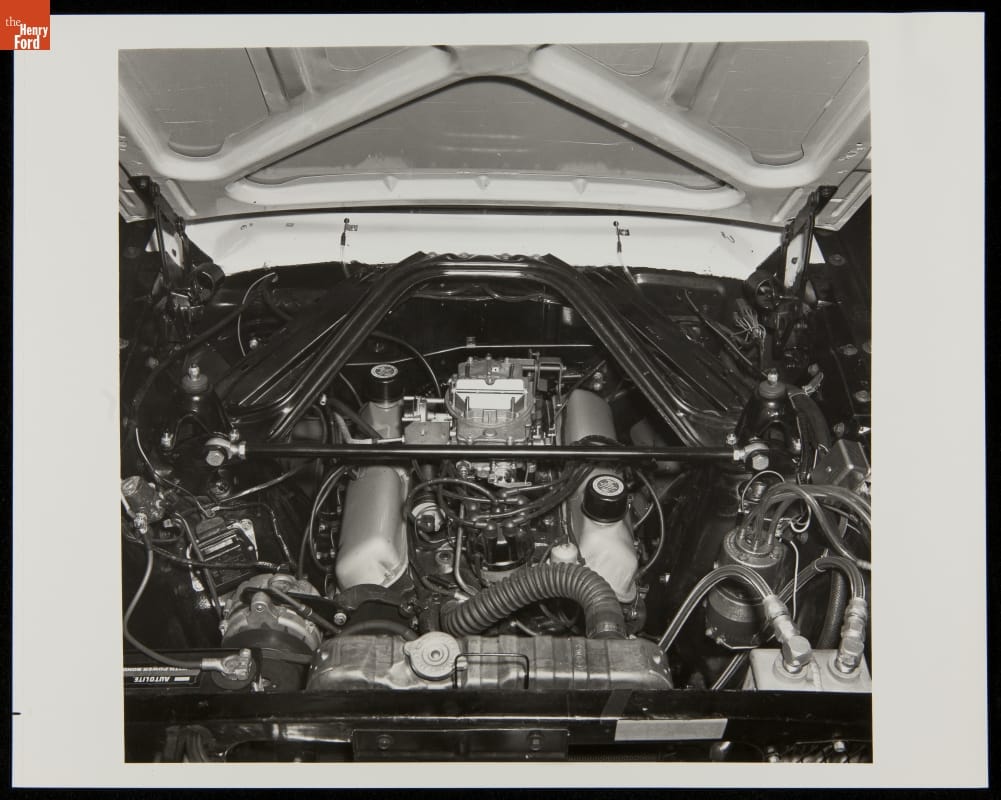
- Ford Motorsports Records--East African Safari--Photography--Item 6 - The East African Safari Rally tested a car's and driver's endurance. During the 1960s, the rally's course covered thousands of miles passing through Kenya, Tanganyika (Tanzania) and Uganda. Drivers could expect punishing road conditions. Mud or dust was commonplace. And dodging wild animals could be expected. In 1964, the first American teams entered the grueling competition driving Mercury Comet Calientes.
- 1963-1964
- Collections - Artifact
Ford Motorsports Records--East African Safari--Photography--Item 6
The East African Safari Rally tested a car's and driver's endurance. During the 1960s, the rally's course covered thousands of miles passing through Kenya, Tanganyika (Tanzania) and Uganda. Drivers could expect punishing road conditions. Mud or dust was commonplace. And dodging wild animals could be expected. In 1964, the first American teams entered the grueling competition driving Mercury Comet Calientes.
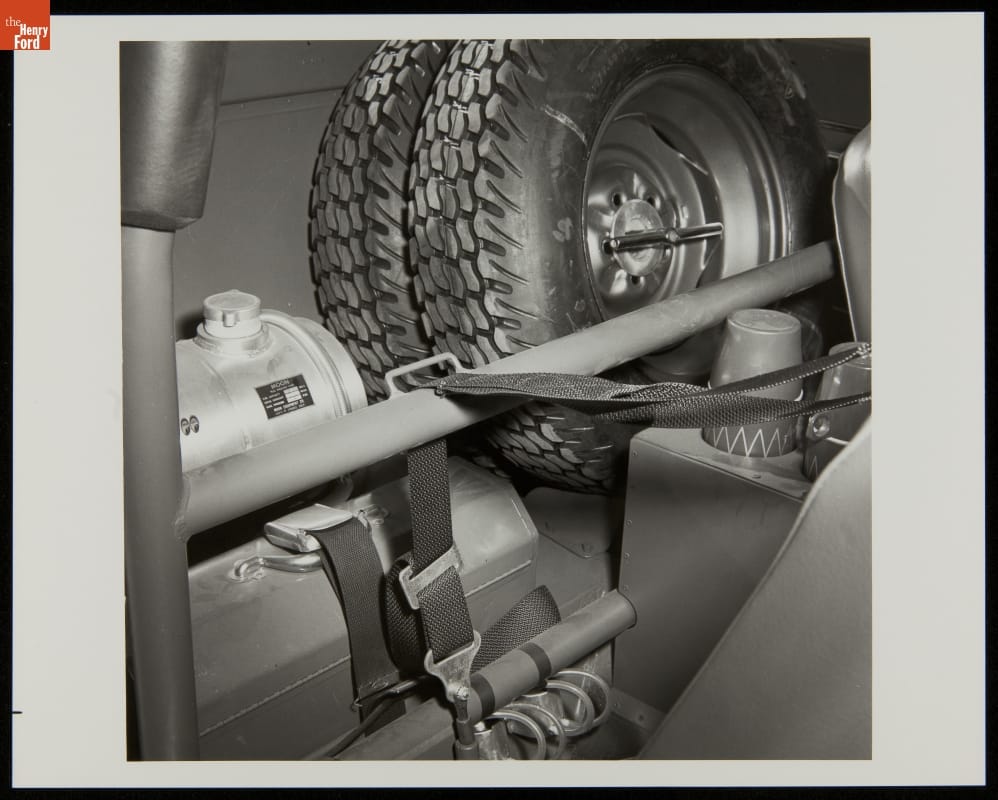
- Ford Motorsports Records--East African Safari--Photography--Item 8 - The East African Safari Rally tested a car's and driver's endurance. During the 1960s, the rally's course covered thousands of miles passing through Kenya, Tanganyika (Tanzania) and Uganda. Drivers could expect punishing road conditions. Mud or dust was commonplace. And dodging wild animals could be expected. In 1964, the first American teams entered the grueling competition driving Mercury Comet Calientes.
- 1963-1964
- Collections - Artifact
Ford Motorsports Records--East African Safari--Photography--Item 8
The East African Safari Rally tested a car's and driver's endurance. During the 1960s, the rally's course covered thousands of miles passing through Kenya, Tanganyika (Tanzania) and Uganda. Drivers could expect punishing road conditions. Mud or dust was commonplace. And dodging wild animals could be expected. In 1964, the first American teams entered the grueling competition driving Mercury Comet Calientes.
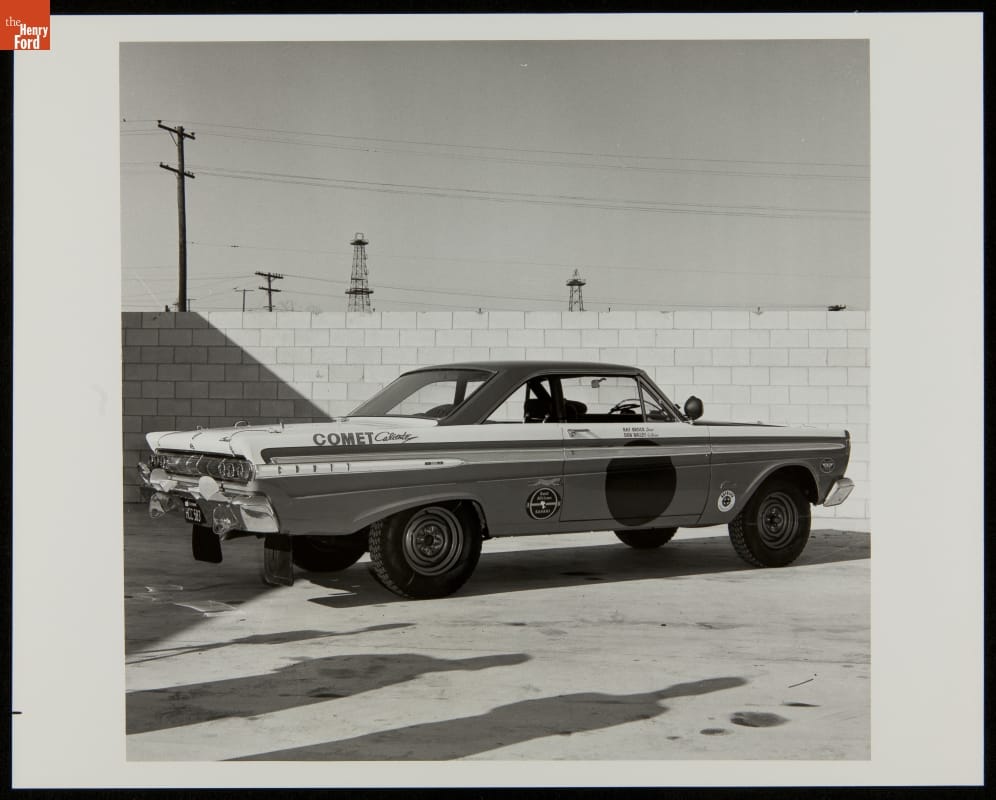
- Ford Motorsports Records--East African Safari--Photography--Item 11 - The East African Safari Rally tested a car's and driver's endurance. During the 1960s, the rally's course covered thousands of miles passing through Kenya, Tanganyika (Tanzania) and Uganda. Drivers could expect punishing road conditions. Mud or dust was commonplace. And dodging wild animals could be expected. In 1964, the first American teams entered the grueling competition driving Mercury Comet Calientes.
- 1963-1964
- Collections - Artifact
Ford Motorsports Records--East African Safari--Photography--Item 11
The East African Safari Rally tested a car's and driver's endurance. During the 1960s, the rally's course covered thousands of miles passing through Kenya, Tanganyika (Tanzania) and Uganda. Drivers could expect punishing road conditions. Mud or dust was commonplace. And dodging wild animals could be expected. In 1964, the first American teams entered the grueling competition driving Mercury Comet Calientes.
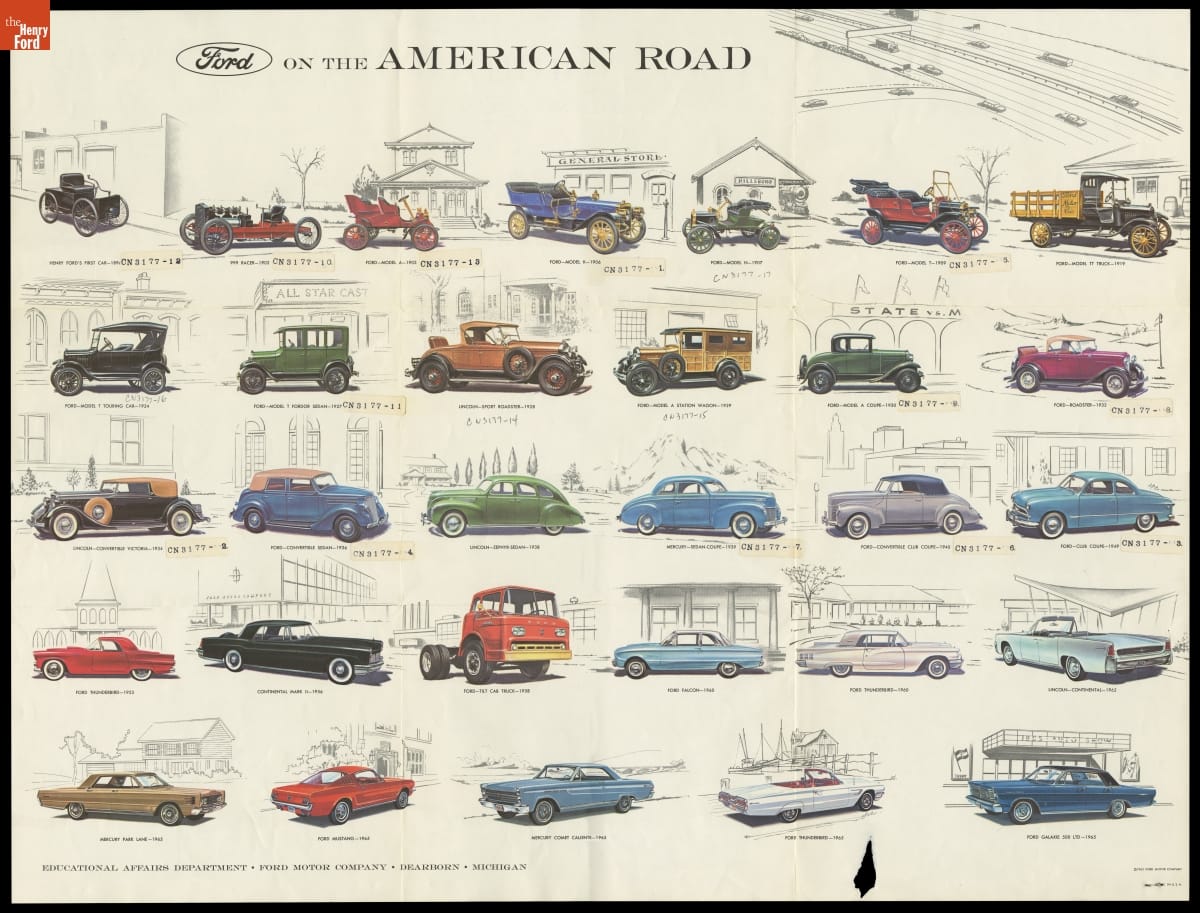
- Advertising Poster, "Ford on the American Road," 1962-1965 - The evolution of Ford Motor Company vehicles through 1965 is illustrated in this colorful advertisement. The line starts with the 1896 Quadricycle and the 1902 "999" race car, and it includes four variants of the pivotal Model T. The Lincoln and Mercury marques are each represented with multiple cars. Later important Ford models, like Thunderbird and Mustang, finish the progression.
- 1962 - 1965
- Collections - Artifact
Advertising Poster, "Ford on the American Road," 1962-1965
The evolution of Ford Motor Company vehicles through 1965 is illustrated in this colorful advertisement. The line starts with the 1896 Quadricycle and the 1902 "999" race car, and it includes four variants of the pivotal Model T. The Lincoln and Mercury marques are each represented with multiple cars. Later important Ford models, like Thunderbird and Mustang, finish the progression.
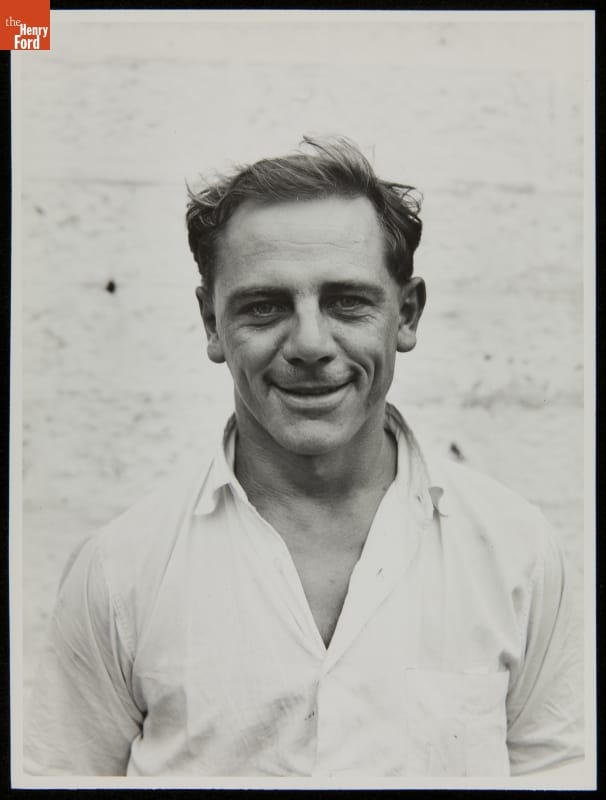
- Ford Motorsports Records--East African Safari--Photography--Item 1 - The East African Safari Rally tested a car's and driver's endurance. During the 1960s, the rally's course covered thousands of miles passing through Kenya, Tanganyika (Tanzania) and Uganda. Drivers could expect punishing road conditions. Mud or dust was commonplace. Many cars that entered did not finish. Peter Walker, pictured here, competed on one of the American teams in 1964.
- 1963-1964
- Collections - Artifact
Ford Motorsports Records--East African Safari--Photography--Item 1
The East African Safari Rally tested a car's and driver's endurance. During the 1960s, the rally's course covered thousands of miles passing through Kenya, Tanganyika (Tanzania) and Uganda. Drivers could expect punishing road conditions. Mud or dust was commonplace. Many cars that entered did not finish. Peter Walker, pictured here, competed on one of the American teams in 1964.
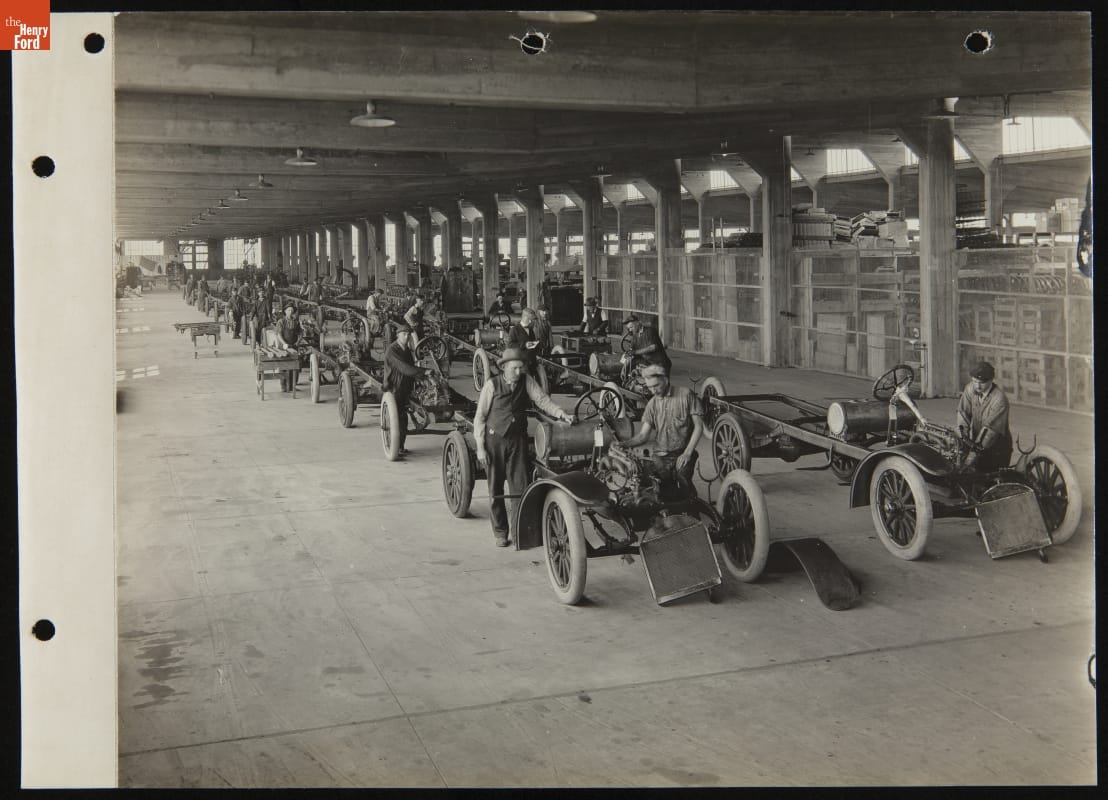
- Vehicle Assembly Line, Comet Automobile Company, circa 1918 - George W. Jagers established the Comet Automobile Company in Decatur, Illinois, in 1917. The six-cylinder Comet -- an assembled car built from components manufactured by outside suppliers -- was a steady, if not spectacular, seller in the Midwest. But Jagers expanded too quickly, building a new factory in 1920 that Comet couldn't afford. The company's assets were liquidated in 1923.
- circa 1918
- Collections - Artifact
Vehicle Assembly Line, Comet Automobile Company, circa 1918
George W. Jagers established the Comet Automobile Company in Decatur, Illinois, in 1917. The six-cylinder Comet -- an assembled car built from components manufactured by outside suppliers -- was a steady, if not spectacular, seller in the Midwest. But Jagers expanded too quickly, building a new factory in 1920 that Comet couldn't afford. The company's assets were liquidated in 1923.
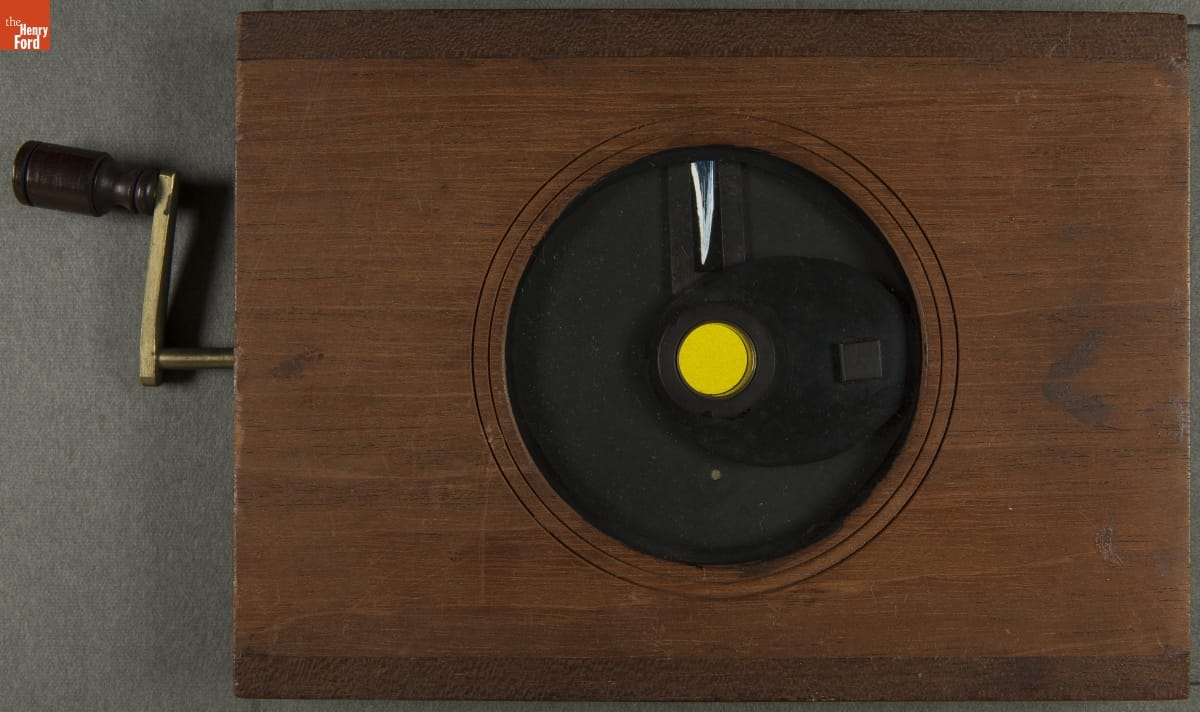
- Mechanical Lantern Slide, Movement of a Comet, 1860-1900 - Magic lanterns use a concave mirror and light source to project images on glass slides with painted or photographic scenes. Developed in the 17th century, magic lanterns predate slide projectors and motion pictures. In the hands of magicians, they became "lanterns of fright," projecting wondrous images and apparitions. Slide themes ranged widely: exotic travel, folklore, advertising, history, science, and art.
- 1860-1900
- Collections - Artifact
Mechanical Lantern Slide, Movement of a Comet, 1860-1900
Magic lanterns use a concave mirror and light source to project images on glass slides with painted or photographic scenes. Developed in the 17th century, magic lanterns predate slide projectors and motion pictures. In the hands of magicians, they became "lanterns of fright," projecting wondrous images and apparitions. Slide themes ranged widely: exotic travel, folklore, advertising, history, science, and art.
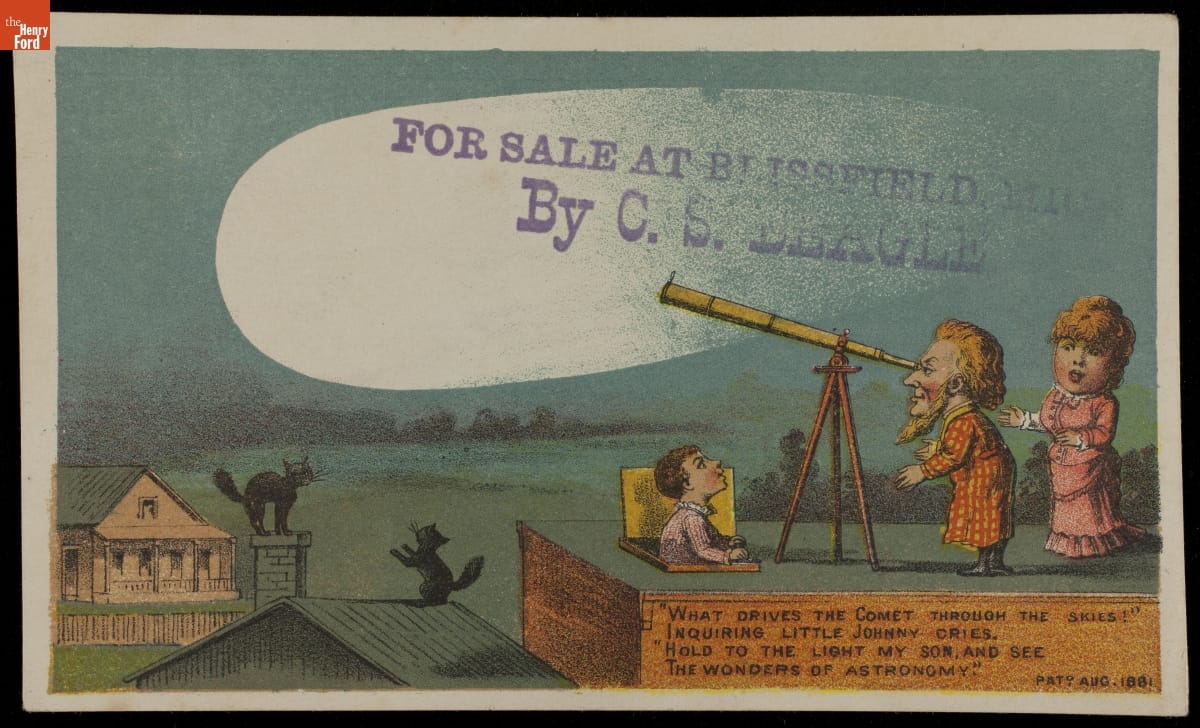
- Trade Card for Jackson Wagons, Austin, Tomlinson & Webster Mfg. Co., 1881-1900 - In the last third of the nineteenth century, an unprecedented variety of consumer goods flooded the American market. Some enterprising advertisers sought to distinguish their products from the competition by distributing trade cards. Special versions revealed hidden images and words when held to the light. Americans enjoyed and often saved the popular little advertisements, which survive as historical records of consumerism in the United States.
- 1881-1900
- Collections - Artifact
Trade Card for Jackson Wagons, Austin, Tomlinson & Webster Mfg. Co., 1881-1900
In the last third of the nineteenth century, an unprecedented variety of consumer goods flooded the American market. Some enterprising advertisers sought to distinguish their products from the competition by distributing trade cards. Special versions revealed hidden images and words when held to the light. Americans enjoyed and often saved the popular little advertisements, which survive as historical records of consumerism in the United States.
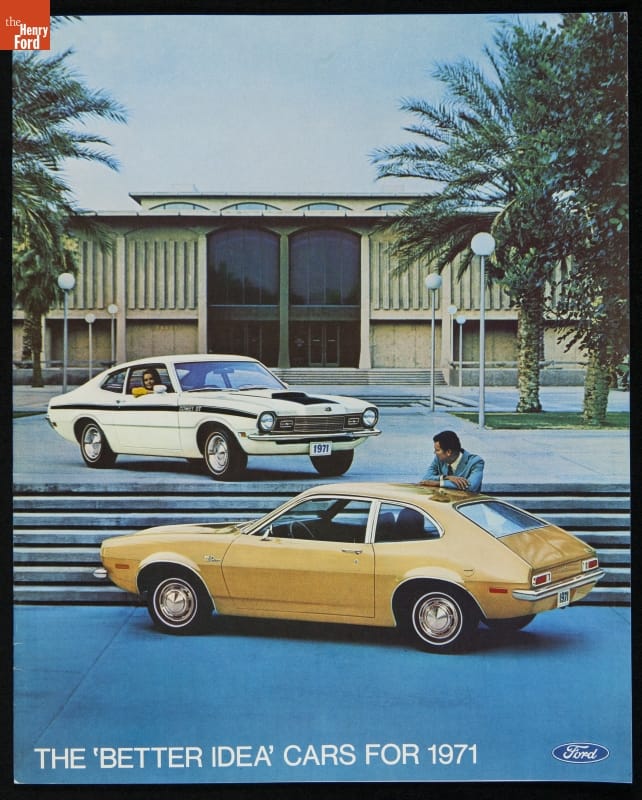
- Sales Brochure, 1971 Ford Cars, "The 'Better Idea' Cars for 1971" - Car brochures have evolved from straightforward product catalogues into polished creative sales tools. Their quality paper, rich color, inventive formats, and sophisticated graphic design all contribute to a buyer's developing impression of a car in a showroom. Advertising might entice people to a dealership, but brochures extend and deepen the relationship between vehicle and potential buyer.
- 1971
- Collections - Artifact
Sales Brochure, 1971 Ford Cars, "The 'Better Idea' Cars for 1971"
Car brochures have evolved from straightforward product catalogues into polished creative sales tools. Their quality paper, rich color, inventive formats, and sophisticated graphic design all contribute to a buyer's developing impression of a car in a showroom. Advertising might entice people to a dealership, but brochures extend and deepen the relationship between vehicle and potential buyer.