
Search
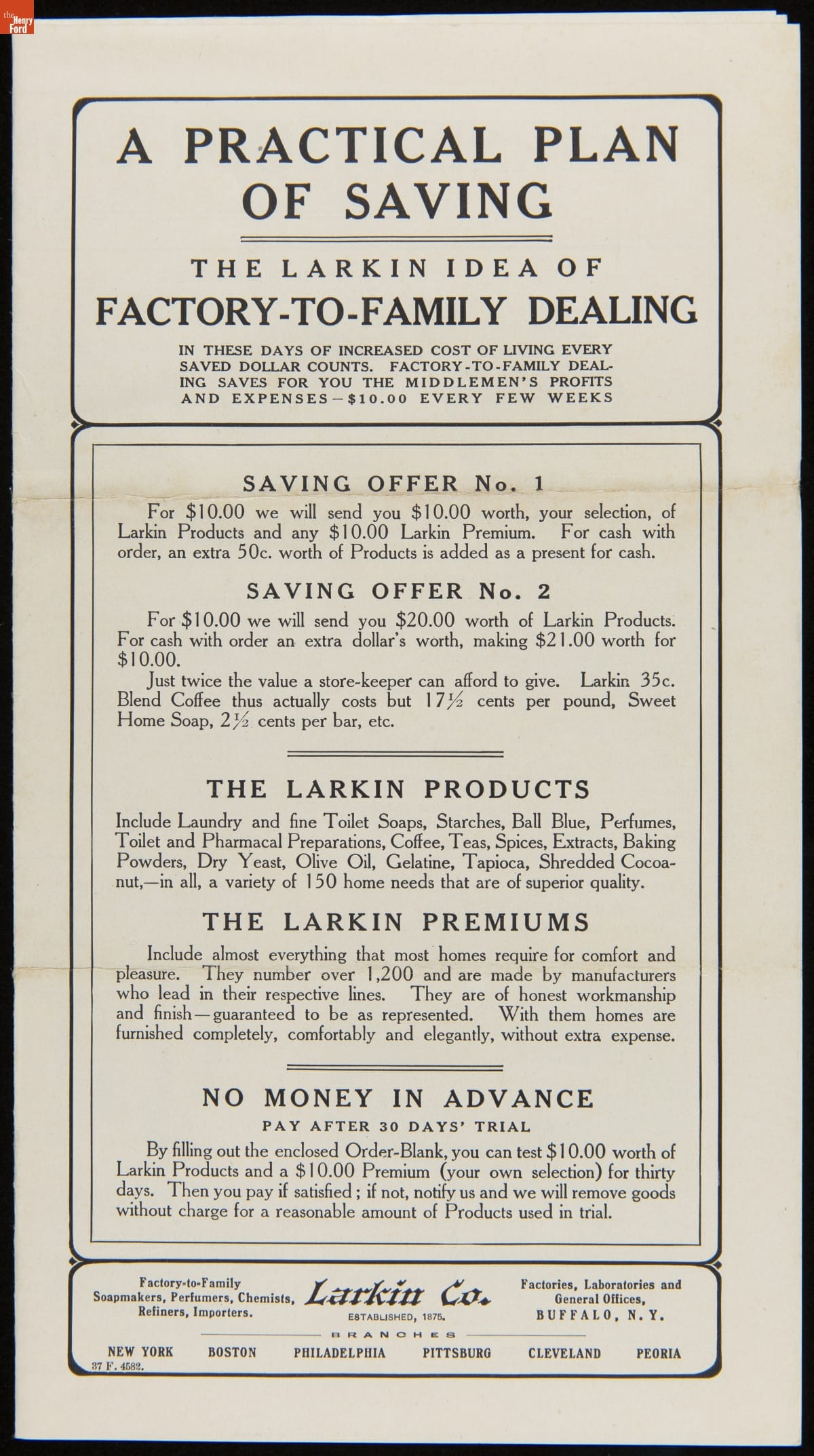
- Larkin Company Trade Catalog, "A Practical Plan of Saving: The Larkin Idea of Factory-To-Family Dealing," circa 1906 - John D. Larkin established a soap manufacturing company in 1875. He hired his brother-in-law, Elbert Hubbard, as a salesman. Hubbard developed "The Larkin Idea," a plan that sold goods directly to consumers through mail-order catalogs and offered incentivizing giveaways. It was a success. By the early 1900s, Larkin's catalogs contained pages of products and even more pages of premiums from which customers could choose.
- circa 1906
- Collections - Artifact
Larkin Company Trade Catalog, "A Practical Plan of Saving: The Larkin Idea of Factory-To-Family Dealing," circa 1906
John D. Larkin established a soap manufacturing company in 1875. He hired his brother-in-law, Elbert Hubbard, as a salesman. Hubbard developed "The Larkin Idea," a plan that sold goods directly to consumers through mail-order catalogs and offered incentivizing giveaways. It was a success. By the early 1900s, Larkin's catalogs contained pages of products and even more pages of premiums from which customers could choose.
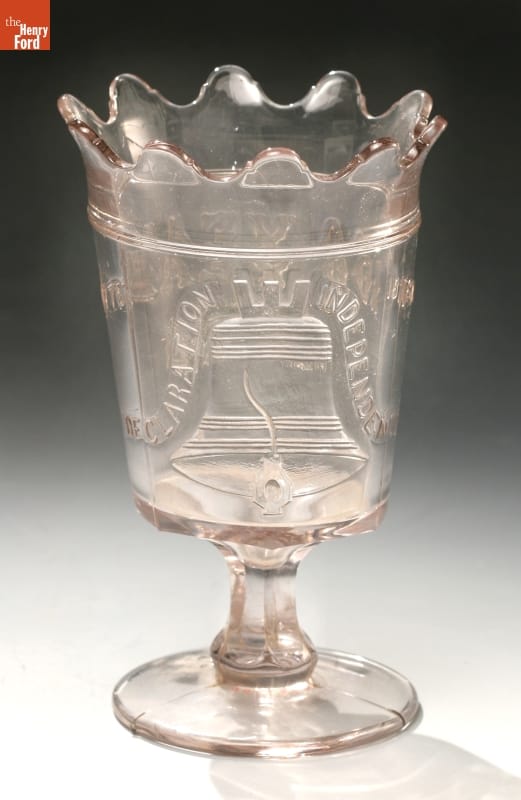
- Commemorative Spoon Holder, "Declaration of Independence: 100 Years Ago," 1876 - Glassmakers from around the world, including forty-seven American firms, mounted exhibitions at the 1876 Centennial Exposition in Philadelphia. Gillinder and Sons of Philadelphia constructed an entire working factory. Visitors could watch Gillinder craftsmen blow, press, engrave, and cut glass souvenirs celebrating the 100th anniversary of American independence. This example features an icon of national freedom, the Liberty Bell.
- 1876
- Collections - Artifact
Commemorative Spoon Holder, "Declaration of Independence: 100 Years Ago," 1876
Glassmakers from around the world, including forty-seven American firms, mounted exhibitions at the 1876 Centennial Exposition in Philadelphia. Gillinder and Sons of Philadelphia constructed an entire working factory. Visitors could watch Gillinder craftsmen blow, press, engrave, and cut glass souvenirs celebrating the 100th anniversary of American independence. This example features an icon of national freedom, the Liberty Bell.
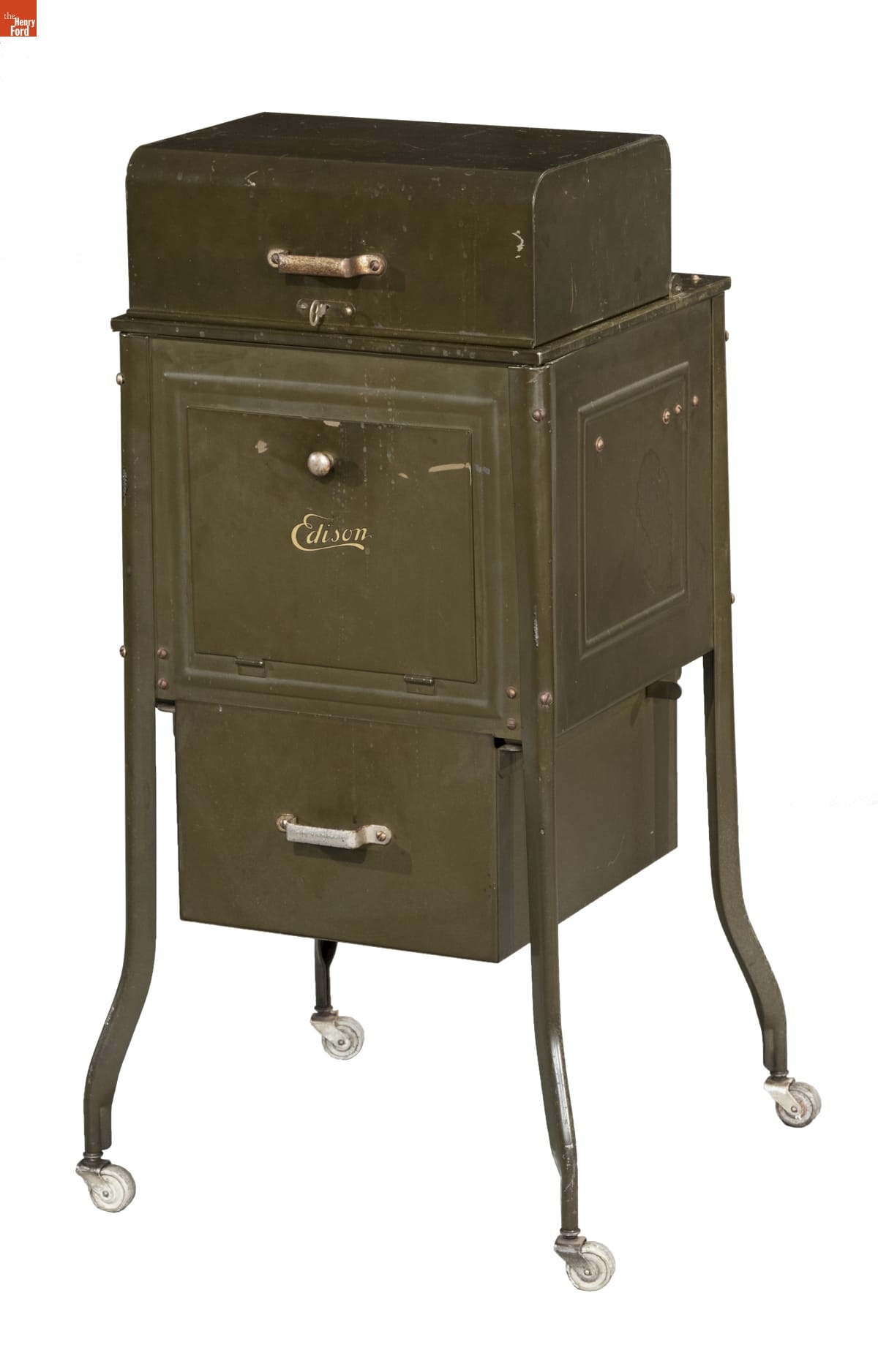
- Ediphone Shaver, circa 1926 - Dictaphones and Ediphones were sound recording devices largely used for oral dictation in business settings. In this scenario, wax cylinder recordings were passed to a secretary, who listened to the recording with a playback-only transcriber and then typed up notes. A shaving machine, such as this one, scraped the previously inscribed layer away allowing a wax cylinder to be reused over 100 times.
- circa 1926
- Collections - Artifact
Ediphone Shaver, circa 1926
Dictaphones and Ediphones were sound recording devices largely used for oral dictation in business settings. In this scenario, wax cylinder recordings were passed to a secretary, who listened to the recording with a playback-only transcriber and then typed up notes. A shaving machine, such as this one, scraped the previously inscribed layer away allowing a wax cylinder to be reused over 100 times.
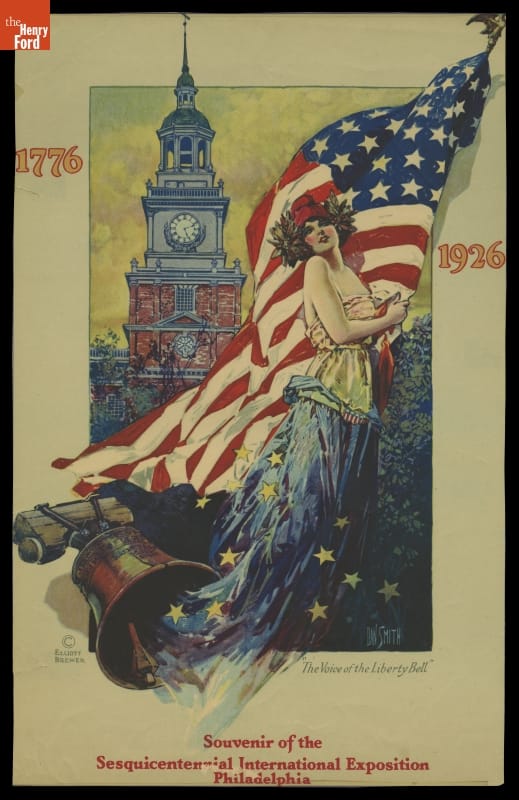
- Photolithograph, "The Voice of the Liberty Bell," 1926 -
- 1926
- Collections - Artifact
Photolithograph, "The Voice of the Liberty Bell," 1926
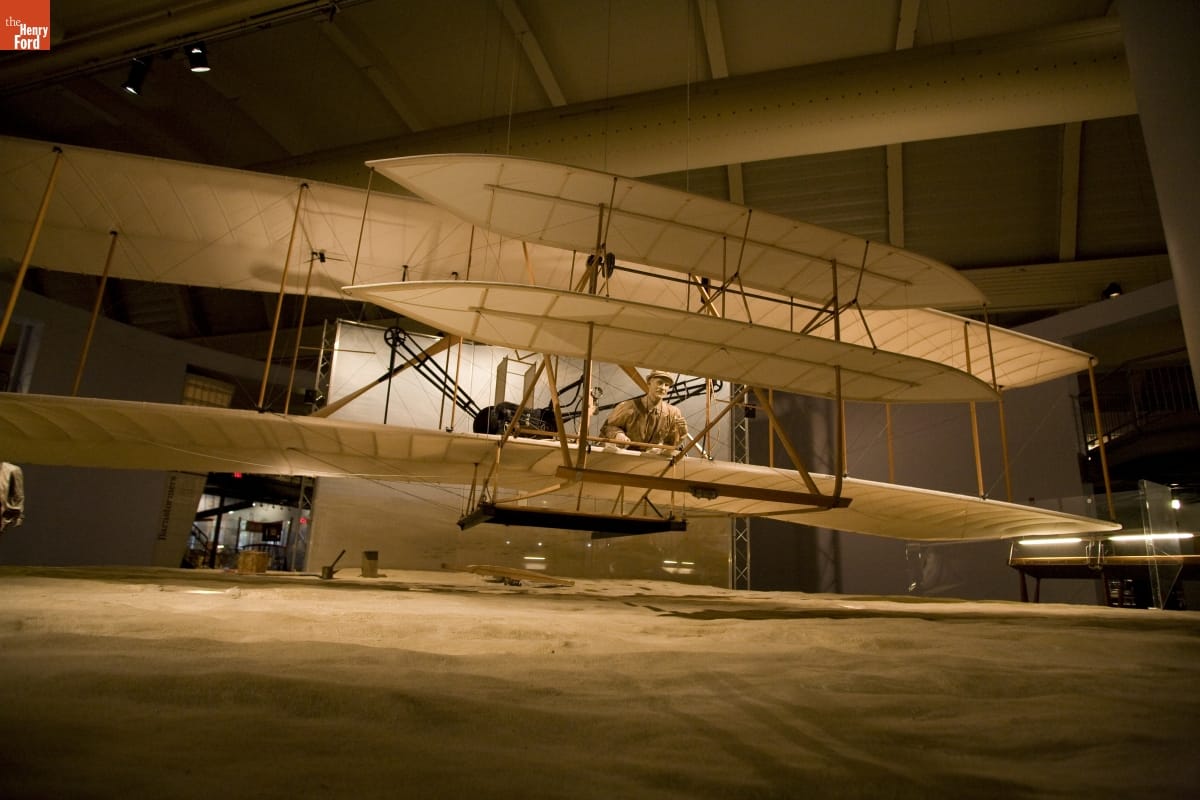
- Replica of the 1903 Wright Flyer - This copy of the 1903 Wright Flyer faithfully replicates the original aircraft. On December 17, 2003, the replica attempted to duplicate the Wright brothers' first flight at Kill Devil Hills, North Carolina, exactly one hundred years after that historic feat. The attempt was foiled by bad weather, though the replica flew successfully in earlier tests.
- 1903
- Collections - Artifact
Replica of the 1903 Wright Flyer
This copy of the 1903 Wright Flyer faithfully replicates the original aircraft. On December 17, 2003, the replica attempted to duplicate the Wright brothers' first flight at Kill Devil Hills, North Carolina, exactly one hundred years after that historic feat. The attempt was foiled by bad weather, though the replica flew successfully in earlier tests.
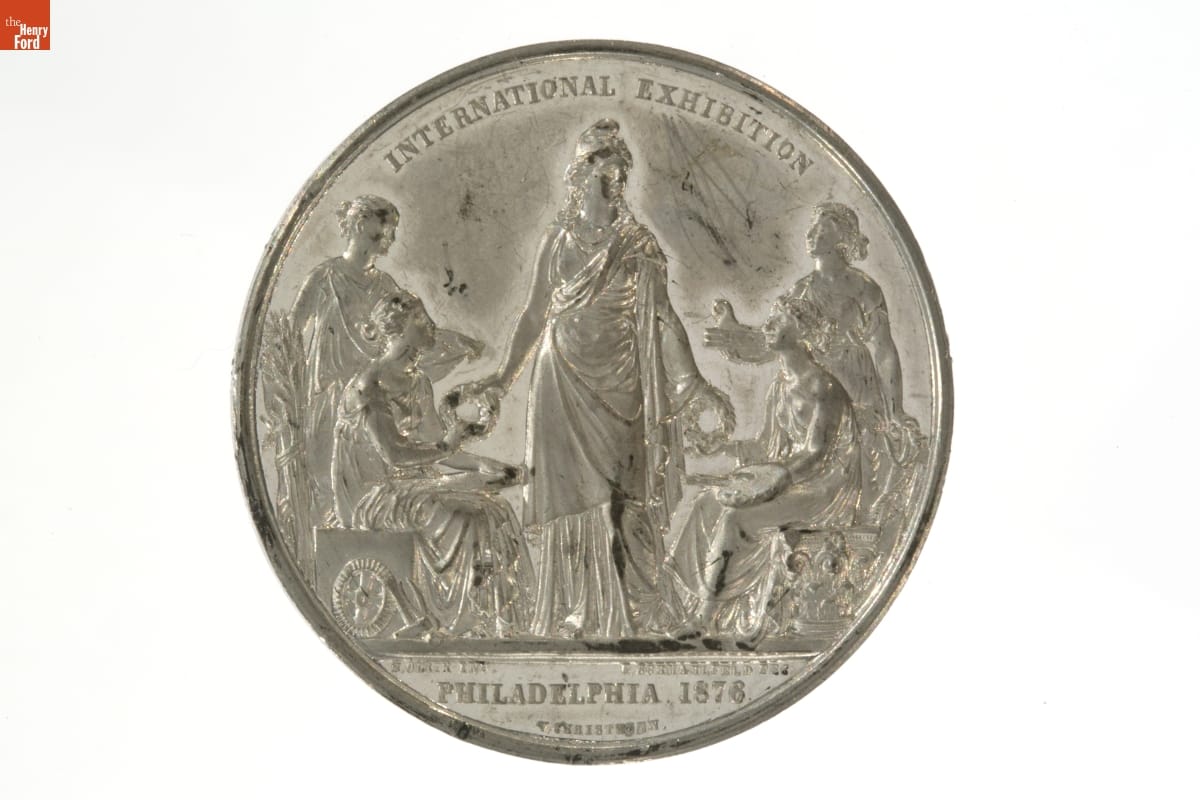
- Commemorative Medal, United States Centennial Exhibition, 1876 - Philadelphia's Centennial International Exhibition of 1876 celebrated the 100th anniversary of the signing of the Declaration of Independence. Around ten million people attended the fair and many returned home with mementos of their visit. Some souvenirs, like this commemorative medal, contain the image of George Washington -- Revolutionary War general and hero and America's first president.
- 1876
- Collections - Artifact
Commemorative Medal, United States Centennial Exhibition, 1876
Philadelphia's Centennial International Exhibition of 1876 celebrated the 100th anniversary of the signing of the Declaration of Independence. Around ten million people attended the fair and many returned home with mementos of their visit. Some souvenirs, like this commemorative medal, contain the image of George Washington -- Revolutionary War general and hero and America's first president.
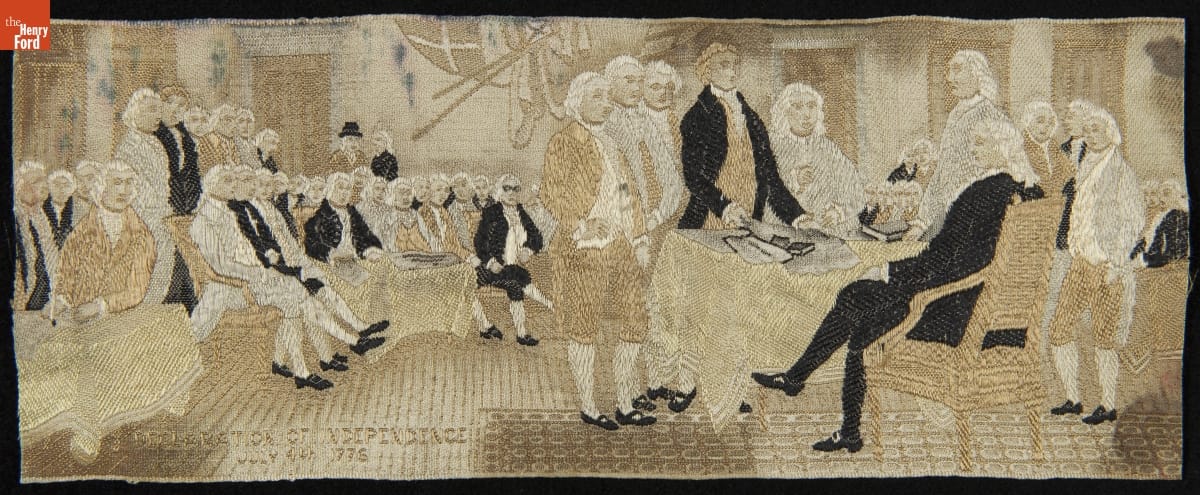
- Silk Picture, "Signing of the Declaration of Independence," 1876 -
- 1876
- Collections - Artifact
Silk Picture, "Signing of the Declaration of Independence," 1876
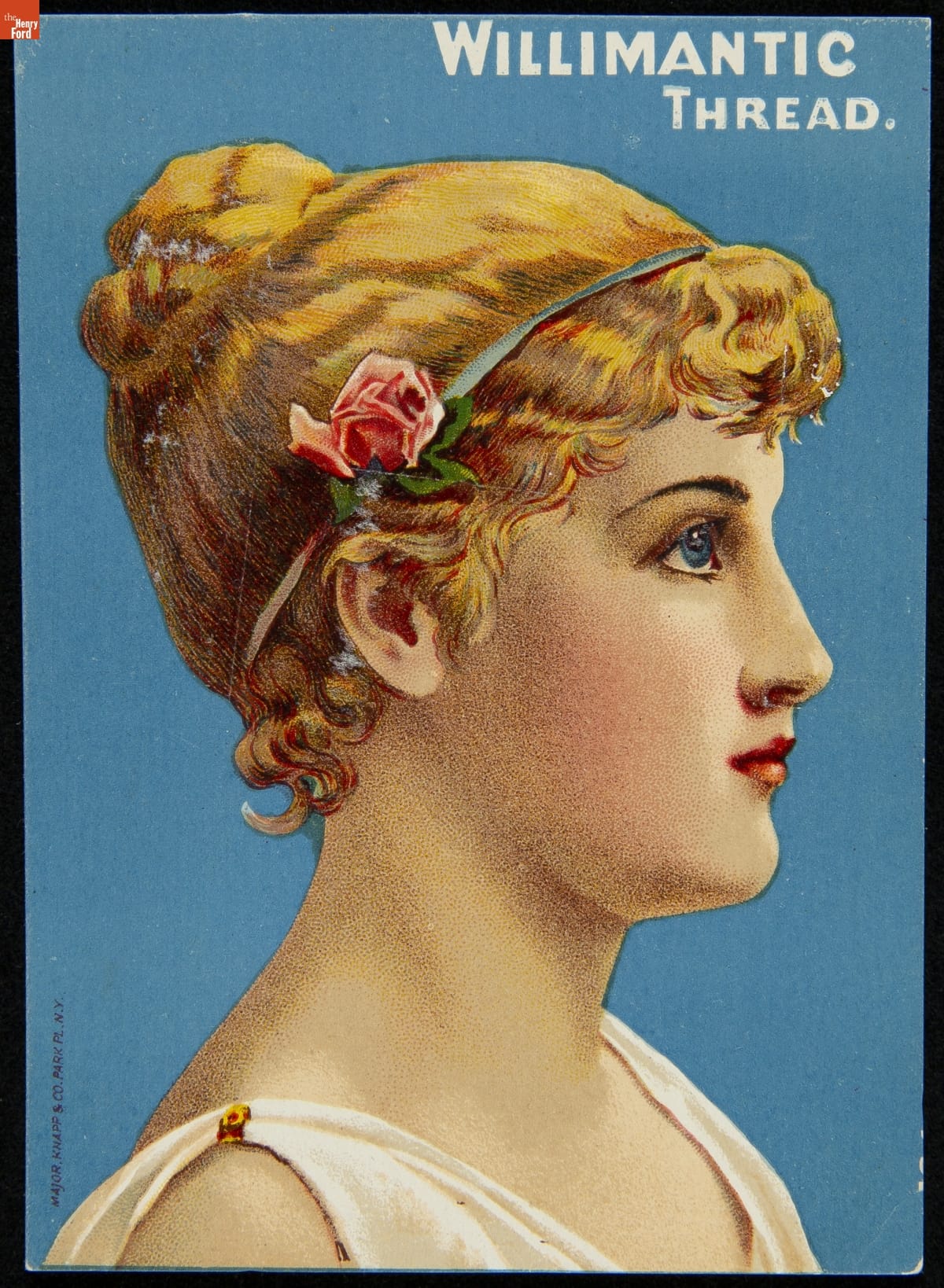
- Trade Card for Spool Cotton, Willimantic Linen Co., circa 1881 - In the last third of the nineteenth century, an unprecedented variety of consumer goods and services flooded the American market. Advertisers, armed with new methods of color printing, bombarded potential customers with trade cards. Americans enjoyed and often saved the vibrant little advertisements found in product packages or distributed by local merchants. Many survive as historical records of commercialism in the United States.
- circa 1881
- Collections - Artifact
Trade Card for Spool Cotton, Willimantic Linen Co., circa 1881
In the last third of the nineteenth century, an unprecedented variety of consumer goods and services flooded the American market. Advertisers, armed with new methods of color printing, bombarded potential customers with trade cards. Americans enjoyed and often saved the vibrant little advertisements found in product packages or distributed by local merchants. Many survive as historical records of commercialism in the United States.
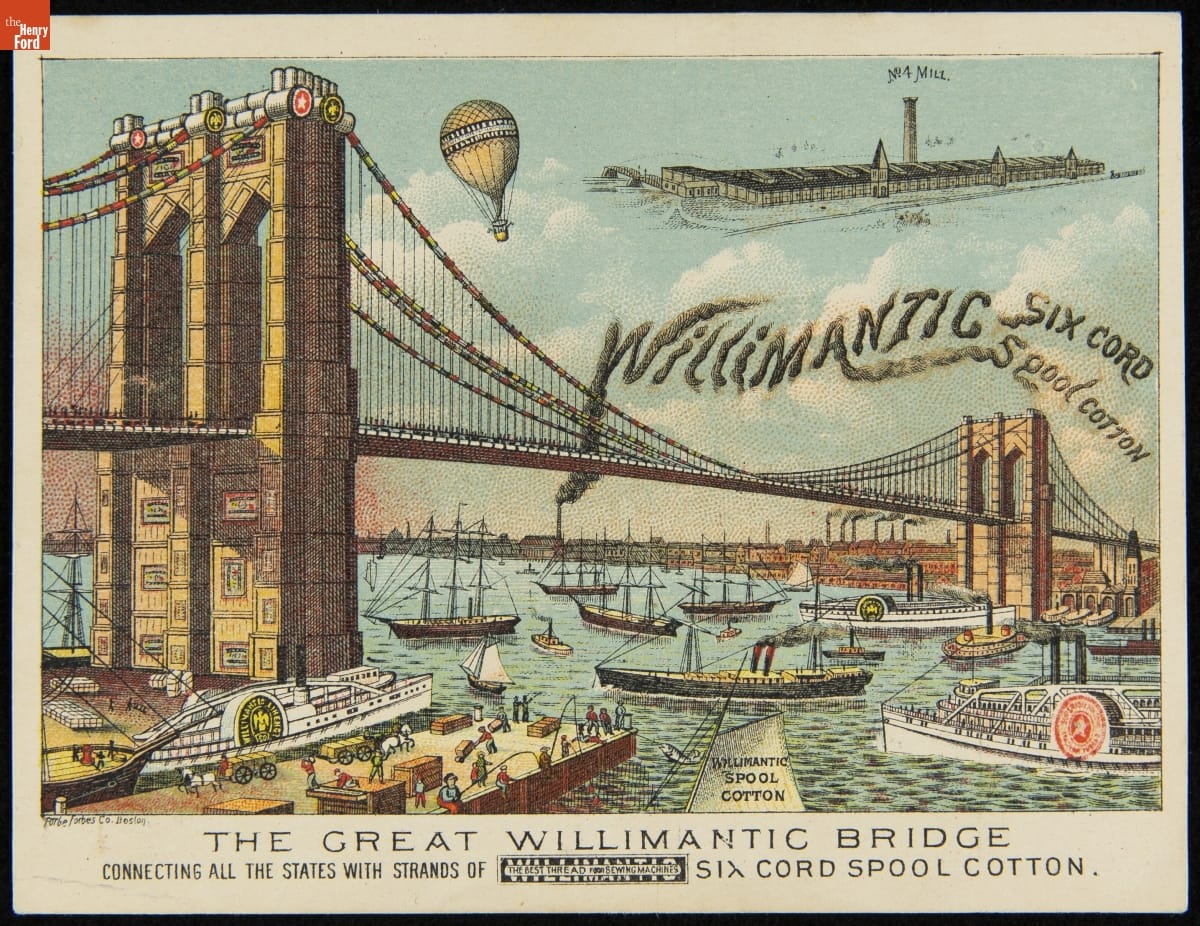
- Trade Card for Six Cord Spool Cotton, Willimantic Linen Co., circa 1881 - In the last third of the nineteenth century, an unprecedented variety of consumer goods and services flooded the American market. Advertisers, armed with new methods of color printing, bombarded potential customers with trade cards. Americans enjoyed and often saved the vibrant little advertisements found in product packages or distributed by local merchants. Many survive as historical records of commercialism in the United States.
- circa 1881
- Collections - Artifact
Trade Card for Six Cord Spool Cotton, Willimantic Linen Co., circa 1881
In the last third of the nineteenth century, an unprecedented variety of consumer goods and services flooded the American market. Advertisers, armed with new methods of color printing, bombarded potential customers with trade cards. Americans enjoyed and often saved the vibrant little advertisements found in product packages or distributed by local merchants. Many survive as historical records of commercialism in the United States.
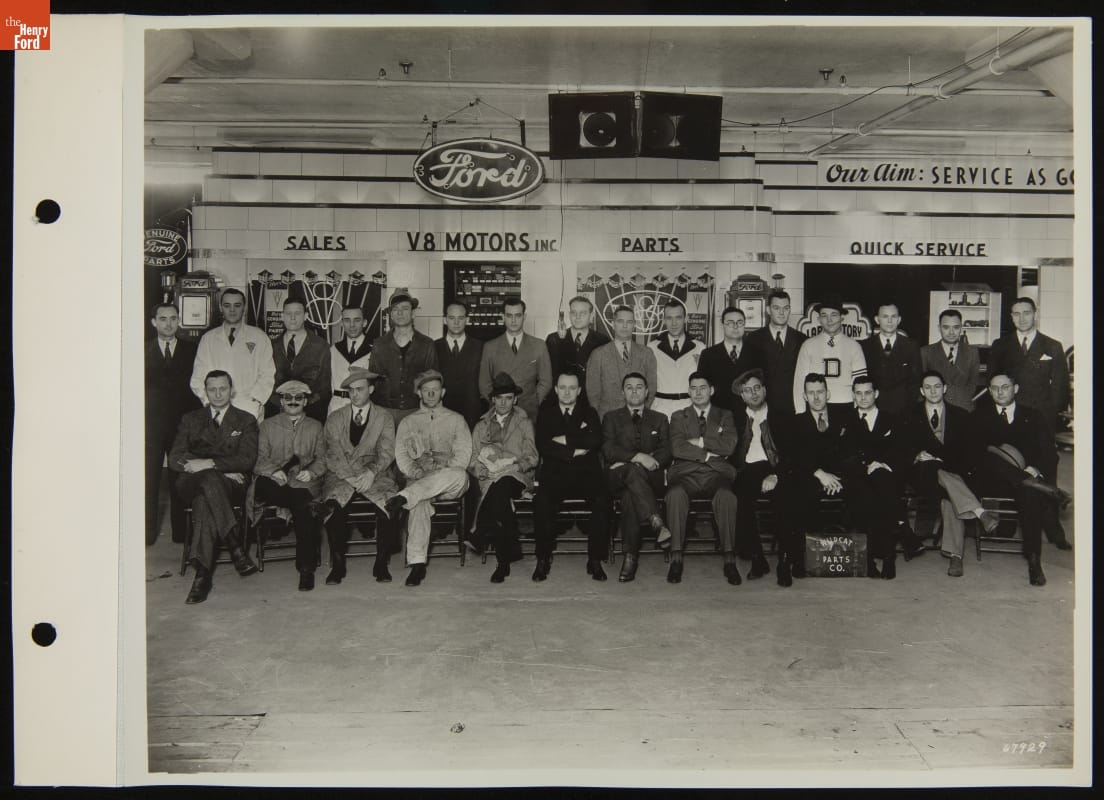
- Exhibition Attendees at Ford Service Exhibit at Dallas Centennial Exposition, February 1937 - The Texas Centennial Exposition in Dallas celebrated the frontier past of Texas, especially its 1836 victory over Mexico. The Ford Motor Company Pavilion, among the largest of industrial firms' buildings at the fair, was designed by industrial designer Walter Dorwin Teague. Its interior displays focused on how agriculture and natural resources of the Southwest could be transformed into car parts.
- February 16, 1937
- Collections - Artifact
Exhibition Attendees at Ford Service Exhibit at Dallas Centennial Exposition, February 1937
The Texas Centennial Exposition in Dallas celebrated the frontier past of Texas, especially its 1836 victory over Mexico. The Ford Motor Company Pavilion, among the largest of industrial firms' buildings at the fair, was designed by industrial designer Walter Dorwin Teague. Its interior displays focused on how agriculture and natural resources of the Southwest could be transformed into car parts.